Top Industrial Motor Manufacturers in China?

Time:2026-11-21 Author:Sophia
0%

China’s industrial motor sector spans large export groups, specialist factories, and regional manufacturers. Names often considered by buyers include Wolong Electric, Wannan Electric, Shanghai Electric, and Nanyang Explosion Protection. Their products serve different duties, so a popularity list alone can hide important differences.

Austin Hughes, co-author of Electric Motors and Drives, offers a useful engineering perspective. A concise paraphrase of his work is: “Match the motor to its load, operating cycle, and control system—not just its rated power.” This is a paraphrase, not a verbatim quotation. The distinction matters. A motor running a pump for steady shifts faces different demands from one driving a conveyor with frequent starts. Check efficiency class, insulation, enclosure, cooling method, speed range, and service support. Ask for test documentation, too. A polished brochure is not a factory test.

This guide compares manufacturers through product range, technical capability, quality evidence, customization, and after-sales support. It also considers practical details, such as whether replacement bearings are available and how quickly a supplier answers a commissioning question. A shortlist can still miss a strong regional producer; public information is uneven. Treat rankings as a starting point, then verify specifications against your site conditions. The best choice is not always the biggest name. It is the motor and supplier that keep your equipment running reliably.
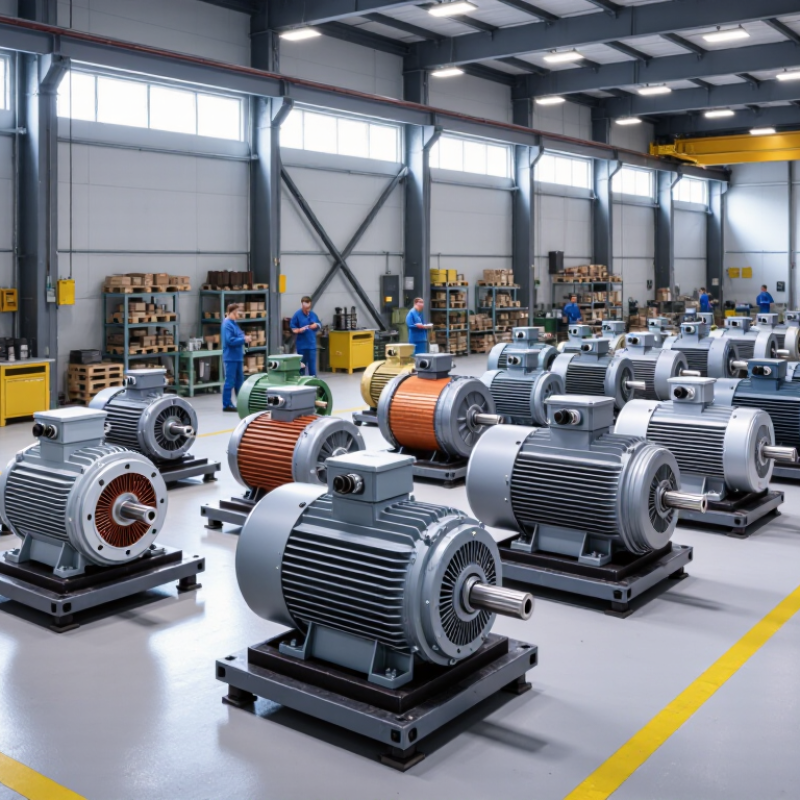
Top Industrial Motor Manufacturers in China?

Overview of China’s Industrial Motor Industry

China’s industrial motor industry serves a wide range of applications, from pumps and compressors to production lines. Its strength comes from a broad manufacturing base, skilled component suppliers, and established export channels. Yet the market is not uniform. Product quality, documentation, and customization support can differ considerably between factories.

Production often combines automated winding with hands-on assembly and inspection. Stator laminations, copper windings, bearings, and rotor balance all affect efficiency and service life. Testing should cover more than whether a motor starts. Buyers can ask for rated-load results, temperature-rise data, vibration readings, and clear explanations of the test conditions. Small details matter. A neat nameplate cannot replace reliable records.

Energy efficiency and variable-speed operation are shaping demand, especially in facilities seeking lower power use. Still, the right motor depends on duty cycle, starting method, ambient temperature, and maintenance capacity. A low purchase price may conceal higher operating costs, but a premium specification is not automatically necessary. Compare evidence, not promises. One limitation is that published figures may not reflect a buyer’s actual installation, so sample testing and technical review remain useful before large orders.

Main Types of Industrial Motors and Their Applications

Top Industrial Motor Manufacturers in China?

Industrial motors convert electrical energy into motion for pumps, fans, conveyors, compressors, and production equipment. Induction motors are widely used because they are rugged and need relatively little maintenance. A plant may use one to run a cooling-water pump or move boxes along a conveyor. They suit many steady-duty tasks. But speed control may require a variable-frequency drive.

Synchronous motors maintain a steady speed when matched to the supply frequency. They can serve large compressors and other loads where consistent speed matters. Servo motors offer precise control of position and acceleration, making them useful in packaging machines and automated assembly. DC motors allow straightforward speed adjustment, though brushed designs need periodic inspection. The right choice depends on the load, operating hours, starting torque, and available control system. A small oversight here can mean wasted energy or uneven output.

Tips: Check the motor’s nameplate, duty rating, and protection level before selection. Compare expected load with actual operating conditions. A motor that looks suitable on paper may perform poorly in a dusty, hot, or frequently stopped environment.

Major Industrial Motor Manufacturers in China

Major industrial motor manufacturers in China serve factories, water-treatment plants, mines, and building systems. Their products range from compact induction motors to large units designed for pumps, compressors, and production lines. Capabilities differ widely. Some manufacturers focus on standard frames and fast delivery; others engineer motors for unusual loads, high temperatures, or variable-speed operation.

A useful supplier review goes beyond a catalogue. Check rated output, voltage, frequency, insulation class, enclosure protection, and efficiency data against the actual duty cycle. Ask how each motor is tested, and request traceable test records for temperature rise, vibration, and electrical performance. Details matter. A motor running beside a dusty conveyor may need a different enclosure from one installed in a clean workshop. Documentation can look complete while leaving operating limits unclear.

Manufacturing depth also varies: some facilities produce key components in-house, while others rely on external suppliers. Neither model guarantees quality. I would compare sample inspection results, lead times, spare-parts access, and communication during technical changes. A small mismatch in shaft dimensions can delay installation, even when the motor itself meets its stated rating. It is easy to overvalue a low quotation; I have to remind myself that service support and clear specifications are part of the purchase.

Top Industrial Motor Manufacturers in China? - Major Industrial Motor Manufacturers in China

This brand-neutral overview compares major industrial motor product segments manufactured in China. Specifications below describe common industry offerings, not individual manufacturers or a company ranking.

Motor Segment Typical Power Range Common Rated Voltage Typical Supply Frequency Efficiency Considerations Common Industrial Applications
Low-voltage three-phase induction motors Fractional kilowatt ratings to around 1 MW, depending on frame and design Commonly 380 V, 400 V, 660 V, or 690 V 50 Hz; 60 Hz versions are also available for export and specific installations Efficiency classes and requirements depend on motor design and the applicable IEC or national standard; IE2, IE3, and IE4 models are offered in the market Pumps, fans, compressors, conveyors, machine tools, and general factory equipment
High-voltage induction motors Typically hundreds of kilowatts to tens of megawatts, depending on application Commonly 3 kV, 6 kV, or 10 kV Usually 50 Hz; ratings can be engineered for other grid frequencies Efficiency depends on output, pole count, cooling method, and operating duty; project specifications commonly define the required performance Large pumps, compressors, mine ventilation, cement production, steelmaking, and power-generation auxiliaries
Variable-speed drive motors Available across low- and high-voltage power ranges Typically matched to the motor and drive system, from low voltage to medium voltage Designed for operation with variable-frequency drives; allowable speed range depends on the motor and cooling design System efficiency depends on the motor, drive, control strategy, and load profile; inverter-duty insulation and thermal performance are important selection factors Variable-flow pumping, process fans, compressors, extruders, and applications requiring speed control
Permanent-magnet synchronous motors Offered from small industrial ratings to large application-specific systems Determined by the motor-and-drive package; low-voltage and medium-voltage systems are used Normally operated through a variable-frequency drive Can provide high efficiency and power density, particularly where speed control or partial-load operation is important; performance is application-specific Direct-drive equipment, compressors, pumps, fans, production lines, and energy-saving retrofit projects
Explosion-protected industrial motors Available in a range of low- and high-voltage ratings Selected to match the motor rating and site electrical system Commonly 50 Hz, with other frequency ratings available by design Must meet the specified protection concept and applicable certification requirements; efficiency and hazardous-area suitability should be checked separately Petrochemical facilities, refineries, gas handling, chemical plants, and other classified hazardous locations
Special-purpose and application-engineered motors Designed to suit the required torque, speed, duty, and installation conditions Specified according to the project’s power system Specified for the local grid or the associated drive system Performance is defined by the application specification, including duty cycle, temperature rise, cooling, and operating environment Marine equipment, metallurgy, mining, hoisting, water treatment, and other demanding industrial services

Note: Power and voltage ranges are indicative industry-level descriptions, not limits for every product. Confirm the nameplate rating, efficiency standard, protection rating, insulation class, duty type, and required certifications for each project.

Manufacturing Capabilities and Technologies

Industrial motor manufacturing in China combines large-scale production with increasingly precise process control. Strong factories manage the full chain: electrical-steel lamination stamping, rotor balancing, coil winding, insulation, machining, and final testing. On the line, technicians check air gaps, bearing noise, and vibration—not just nameplate output. Tolerance matters. Automated testers can record efficiency, temperature rise, and load performance for each unit, making defects easier to trace.

Efficiency is a core capability, not a decorative specification. The International Energy Agency’s 2011 report, Energy-Efficiency Policy Opportunities for Electric Motor-Driven Systems, estimated that these systems consumed about 45% of global electricity. That figure is an older global estimate, not a current China-specific measurement, but it shows why motor design matters. Manufacturers use improved magnetic materials, optimized winding patterns, tighter assembly controls, and compatible variable-speed operation to reduce losses. Still, factory test results may not match field performance when installation, cooling, or load conditions differ. That gap deserves more attention.

Tips: Ask for test records at stated voltage, frequency, and load. Check whether vibration and temperature readings are documented. Request traceability for key components. A polished datasheet is useful, but not enough.

How to Evaluate and Select a Chinese Motor Manufacturer

Choosing a Chinese industrial motor manufacturer starts with matching the motor to its real operating conditions. Specify voltage, output, speed, duty cycle, ambient temperature, and expected starting load. A motor for a dusty workshop may need different protection from one used indoors. Small details matter. Ask for efficiency and temperature-rise test reports, not only catalogue figures. Check that the tested model matches the motor you plan to order.

Evaluate the factory’s quality controls and engineering support. Ask how it checks winding insulation, shaft dimensions, vibration, and bearing noise. Request sample inspection records and clarify how serial numbers link products to production batches. If possible, review the production line or arrange an independent inspection before shipment. A tidy showroom proves little. Confirm lead times, packaging, spare-parts availability, warranty terms, and who handles technical questions after delivery. Written answers are easier to compare than confident calls.

Tips: Share a clear specification sheet and drawings. Request a sample under your intended load. Compare test data across suppliers, and verify any claimed certifications with the issuing body. Keep a record of agreed tolerances and acceptance checks. One weakness in this process: a factory visit cannot predict every field failure, so leave room for ongoing monitoring after installation.

FAQS

Which industrial motor types are commonly used?

Induction motors suit pumps, fans, and conveyors. They are rugged and need relatively little maintenance. Synchronous motors keep a steady speed. Servo motors control position precisely, while DC motors offer straightforward speed adjustment.

How should I choose a motor for my equipment?

Match the motor to its load, operating hours, starting torque, and control system. Check voltage, output, speed, duty cycle, and ambient temperature. A dusty workshop or frequent stops can change the choice.

When might a variable-frequency drive be useful?

An induction motor may need a variable-frequency drive for speed control. Check that the motor and control system suit the intended operation. Conditions matter.

What manufacturing checks are important?

Look for checks on winding insulation, shaft dimensions, air gaps, vibration, and bearing noise. Ask whether final testing records efficiency, temperature rise, and load performance. Tolerance matters.

Why ask for motor test reports?

Reports can show the voltage, frequency, and load used during testing. Confirm that the tested model matches the motor you plan to order. A polished datasheet is not enough.

How can I assess a manufacturer’s quality controls?

Request sample inspection records and traceability for key components. Ask how serial numbers link each motor to its production batch. A tidy showroom proves little.

What details should I confirm before ordering?

Get written terms for lead times, packaging, spare parts, warranty, and technical support. Share clear specifications and drawings. Keep agreed tolerances on record.

Does a factory inspection guarantee field performance?

No. Installation, cooling, and actual loads can change performance. A factory visit cannot predict every field failure. Monitor the motor after installation; that step is easy to overlook.

Conclusion

China’s industrial motor industry supports a wide range of sectors, including manufacturing, energy, transportation, and infrastructure. Industrial Motors are designed to convert electrical energy into mechanical power, with different types suited to specific operating conditions. Common options include induction, synchronous, and specialized high-efficiency motors, used in equipment such as pumps, fans, compressors, conveyors, and production machinery. Choosing the right type depends on factors such as required speed, torque, operating environment, energy use, and maintenance needs.

Chinese manufacturers vary in their production scale, engineering expertise, and ability to customize products. Their capabilities may include precision machining, winding, assembly, testing, and quality control, supported by modern manufacturing and monitoring technologies. When evaluating a potential supplier, buyers should consider product specifications, relevant certifications, production capacity, consistency of quality, technical support, delivery reliability, and after-sales service. A clear comparison of these factors can help identify a manufacturer that meets both operational requirements and long-term performance goals.

Sophia

Sophia

Sophia is a dedicated marketing professional with an exceptional depth of knowledge about her company's products and services. With a keen understanding of market trends and customer needs, she crafts insightful blog posts that not only inform but also engage readers, enriching the company’s online......