Precision motion is no longer limited to expensive robotic platforms. It now appears in desktop CNC machines, laboratory stages, packaging lines, and automated inspection equipment. IFR’s World Robotics 2024 report recorded 541,302 industrial robot installations worldwide in 2023. That figure reflects a broader demand for repeatable, controllable movement.
Stepper Drive Controllers offer a practical response to this demand. They regulate motor current, pulse timing, acceleration, and microstepping with predictable electrical behavior. A well-tuned system can move a camera carriage smoothly along a lead screw. It can also position a label applicator with consistent cycle timing. Microstepping reduces vibration, although it does not automatically guarantee equal mechanical accuracy. This distinction matters.
Motion-control market studies from MarketsandMarkets and Grand View Research continue to identify automation, semiconductor equipment, and medical devices as major growth areas. These sectors require compact control hardware, reliable commissioning, and manageable operating costs. Stepper systems often meet those requirements without the complexity of a full servo architecture. They are especially useful when loads remain moderate and position feedback is not essential.
Still, choosing a controller should involve more than comparing current ratings. Engineers must examine motor inductance, supply voltage, load inertia, resonance, thermal limits, and emergency-stop requirements. A poorly matched drive may create audible noise, missed steps, or excessive heat. That reality is easy to overlook. The best design treats Stepper Drive Controllers as part of a complete motion system, not as isolated components. Proper testing, documented parameters, and compliance with applicable machinery standards strengthen reliability in real production environments.
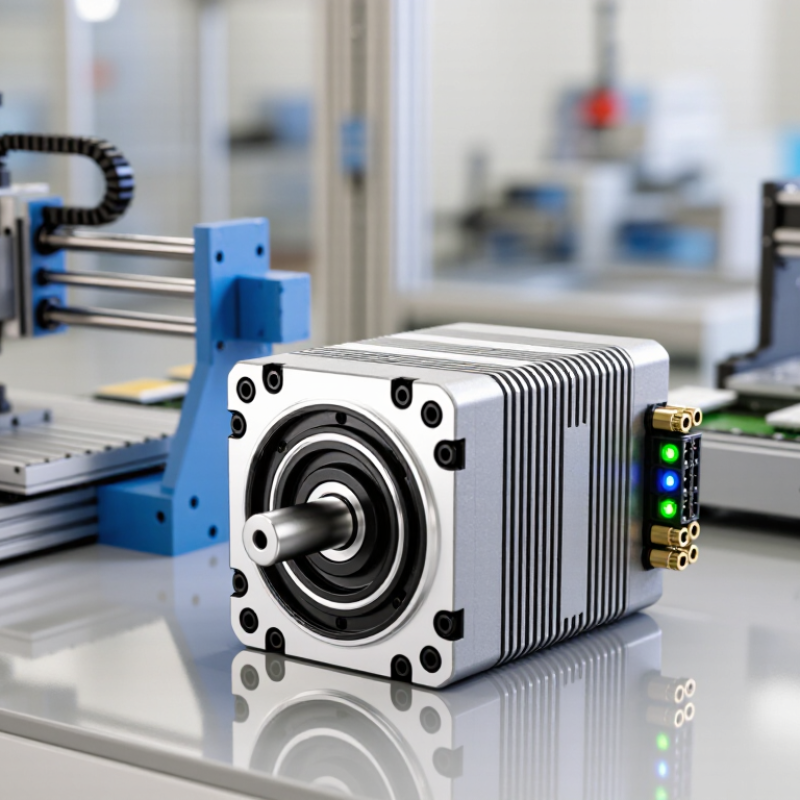
A stepper drive controller manages a motor’s movement through timed electrical pulses. It receives commands from a motion system, then controls step position, direction, speed, and acceleration. In many systems, the controller and drive are integrated into one unit. The controller creates the motion profile. The drive regulates phase current and energizes the motor windings.
Microstepping can make movement smoother and reduce vibration. Current control also protects the motor from excessive heating. However, microstepping does not always provide equal improvements in real positioning accuracy. Load changes, resonance, friction, and poor acceleration settings can still cause missed steps. That limitation matters in compact conveyors, laboratory stages, and automated inspection equipment.
Industry data supports continued demand for this technology. MarketsandMarkets’ 2024 forecast estimates the global stepper motor market could grow from about USD 2.4 billion in 2024 to USD 3.2 billion by 2029. The report identifies industrial automation, medical equipment, and precision tools as important application areas. These figures describe motors, not controllers alone. Still, they show the expanding environment for stepper-based motion systems.
In practical commissioning, technicians often begin with conservative current and acceleration values. They then observe vibration, temperature, and position repeatability. A controller may be affordable and reliable, yet it is not automatically the best choice for every axis. Closed-loop feedback may be necessary when the load changes sharply or position loss is unacceptable. That is where selection becomes less obvious.
Why Choose Stepper Drive Controllers for Precision Motion?
How Stepper Drive Controllers Regulate Precision Motion
Stepper drive controllers regulate motion by converting command pulses into controlled motor movement. Each pulse represents a defined step or microstep. Pulse frequency determines speed. Pulse timing determines position. Inside the drive, current regulation keeps winding energy within a selected range. This helps the motor produce steadier torque during changing loads.
Microstepping divides a full step into smaller electrical positions. Movement becomes quieter and less abrupt. It can also reduce visible vibration on a linear stage. However, microsteps do not guarantee equal mechanical accuracy. Friction, belt stretch, shaft alignment, and load inertia still affect results. That detail is easy to overlook.
Practical tuning usually begins with moderate acceleration and conservative current settings. The controller then adjusts pulse rate, damping, and current response for the application. During testing, engineers can watch missed steps, surface vibration, and stopping position. A sensor may add feedback when the load changes often. Without feedback, a stepper system can lose position silently under excessive force. It works well, but not magically. Careful measurement remains necessary.
Stepper drive controllers regulate motion by dividing each full motor step into smaller microsteps. The chart shows the theoretical commanded angular increment for a common 1.8° stepper motor at different microstepping settings.
Higher microstepping produces finer commanded motion increments, smoother rotation, and reduced vibration. Actual positioning accuracy also depends on motor construction, load, backlash, resonance, and drive current control.
Stepper drive controllers remain practical when motion must be accurate, repeatable, and easy to adjust.
Their pulse-based control converts digital commands into measured shaft movement. Microstepping can reduce vibration and improve positioning smoothness, especially when a carriage moves slowly over a lead screw. The difference is visible: fewer jerks, cleaner edges, and less mechanical noise.
The International Federation of Robotics reported 541,302 industrial robots installed worldwide in 2023. This growth reflects a wider need for dependable motion control in compact automation systems.
Stepper controllers support that need through adjustable current, acceleration, deceleration, and holding torque. Closed-loop feedback can also detect missed steps and correct position errors before they become costly defects. Still, microstepping is not the same as absolute accuracy. Mechanical backlash, resonance, friction, and poor wiring can reduce real-world performance.
Small details matter. A rigid frame, balanced load, and suitable acceleration profile often improve results more than a higher-resolution setting. Engineers should verify repeatability under the actual payload, not only in an unloaded test.
Industry guidance such as ISO 230-2 also emphasizes measuring positioning accuracy across multiple travel directions and positions. That approach exposes thermal drift and backlash, which simple bench tests may hide. A controller can be precise on paper, yet disappointing in production. This is where careful tuning, documented measurements, and honest tolerance reviews become essential.
Why Choose Stepper Drive Controllers for Precision Motion?
Stepper Drives Compared with Other Motion Systems
Stepper drive controllers offer precise, repeatable movement without complex feedback hardware. A motor can advance in small, controlled steps. This suits 3D printers, inspection tables, dosing equipment, and compact automation. During setup, engineers can watch a carriage move one millimeter at a time. That visibility makes faults easier to trace. Proper current settings also reduce vibration, heat, and missed positions.
Servo systems usually provide faster acceleration and continuous position feedback. They perform better when loads change suddenly or speeds remain high. However, servos often require more tuning, wiring, and maintenance knowledge. Stepper systems are simpler for predictable loads. They also hold position effectively at low speed. The trade-off is important. A stepper can lose synchronisation under overload without immediately reporting the problem.
In practical installations, mechanical alignment matters as much as controller quality. A bent lead screw can create repeating errors every revolution. Resonance may appear as a sharp buzzing sound near specific speeds. Microstepping can make motion smoother, but it does not always improve absolute accuracy. That detail is often overlooked. I would not choose a stepper system for every axis. Heavy vertical loads, rapid tool changes, or safety-critical feedback may demand another approach. For moderate loads and carefully measured motion, stepper drives remain a dependable, economical option. Testing the real load is still wiser than trusting a catalogue specification.
Selecting a stepper drive controller starts with the application, not the motor catalogue. Define travel distance, load mass, acceleration, duty cycle, and allowable positioning error. A controller must deliver enough current without overheating during repeated moves. Check the motor’s torque-speed curve, not only its holding torque. Holding torque says little at high speed.
The 2024 International Federation of Robotics report recorded 4.28 million industrial robots operating worldwide in 2023. This growth increases demand for repeatable, compact motion systems. Stepper drives suit indexing tables, feeders, laboratory stages, and packaging axes. Microstepping can reduce vibration, but it does not guarantee proportional accuracy. Mechanical backlash, resonance, and missed steps still matter. Closed-loop feedback may be better when the load changes sharply. I have seen designs fail because engineers selected resolution before checking inertia. That choice looked precise, but performed poorly.
Tips: Match the controller’s voltage and current range to the motor. Leave thermal margin. Verify pulse frequency, acceleration limits, communication interfaces, and fault outputs. Test the complete mechanism under real load, including cable drag and friction. NEMA guidance can support motor sizing, while IEC 61800-5-2 helps frame functional safety discussions. A practical trial is valuable. Bench results can mislead. Record temperature, noise, settling time, and missed-step behavior after several hours.
It converts command pulses into controlled motor movement. It manages position, direction, speed, and acceleration. The drive regulates winding current.
Each pulse represents a step or microstep. Higher pulse frequency increases motor speed. Pulse timing influences the final position.
Microstepping divides one full motor step into smaller electrical positions. Motion becomes smoother and quieter. Not always more accurate.
No. Excessive load, friction, resonance, or poor acceleration can still cause position loss. The motor may lose position silently.
They usually begin with conservative current and acceleration settings. Then they observe vibration, temperature, and stopping position. Adjust gradually.
Feedback helps when loads change sharply or position loss is unacceptable. A sensor can detect errors during operation. It adds complexity, though.
Backlash, belt stretch, shaft alignment, friction, and load inertia can reduce accuracy. A rigid frame helps. Measure the actual payload.
They should test repeatability at several positions and travel directions. Check unloaded and loaded conditions. A bench test can mislead.
No. They suit many compact automation, inspection, laboratory, and conveyor systems. Rapidly changing loads may require another control approach.
Balanced loads, proper wiring, rigid mounting, and suitable acceleration often help more. Higher resolution is not a magic fix. Measure it.
Stepper Drive Controllers are essential components in precision motion systems, converting control signals into carefully timed electrical currents that move a stepper motor in controlled increments. By managing phase current, step timing, acceleration, and deceleration, they help equipment achieve stable positioning, repeatable movement, and smooth operation. Their design makes them especially useful in applications where predictable motion and straightforward control are more important than extremely high speed.
Compared with basic motor drivers or more complex servo systems, stepper drives offer a practical balance of accuracy, cost, and control simplicity. They can support features such as microstepping, current adjustment, fault protection, and communication with a broader automation system. When selecting a controller, engineers should consider motor requirements, load characteristics, desired resolution, operating speed, power capacity, environmental conditions, and available control interfaces. The right choice allows the motion system to perform reliably while matching the application’s technical and operational needs.

Brea Tech Micro Motor