Choosing the right AC Motors begins with the machine’s real operating conditions, not its nameplate alone. A conveyor, pump, compressor, and fan create different torque demands. Each one changes how the motor heats, starts, and consumes electricity. A motor that appears powerful enough may still waste energy or fail prematurely.
The International Energy Agency reports that electric motor systems consume roughly 43% to 46% of global electricity. The U.S. Department of Energy also identifies motor-driven equipment as a major industrial energy user. These figures make motor selection an operational decision, not a minor purchasing detail. Dr. Austin Hughes, a respected motor-drive author, states, “The motor must be chosen to suit the load.” That principle remains practical on a factory floor, where a pump may run continuously while a crusher faces sudden torque spikes.
A reliable selection process examines rated power, torque, speed, duty cycle, voltage, enclosure, ambient temperature, and starting method. Efficiency matters, but it is not the only answer. A premium-efficiency motor can perform poorly when oversized, lightly loaded, or paired with an unsuitable drive. That part is often overlooked.
There is no universal best motor.
Industry reports provide useful benchmarks, yet site measurements reveal the truth. Record current during startup. Check vibration near the bearings. Note the actual load profile across a full shift. These details expose assumptions that catalogues cannot. This guide explains how to compare AC Motors carefully, using engineering evidence, lifecycle cost, and the uncomfortable possibility that the first choice may be wrong.
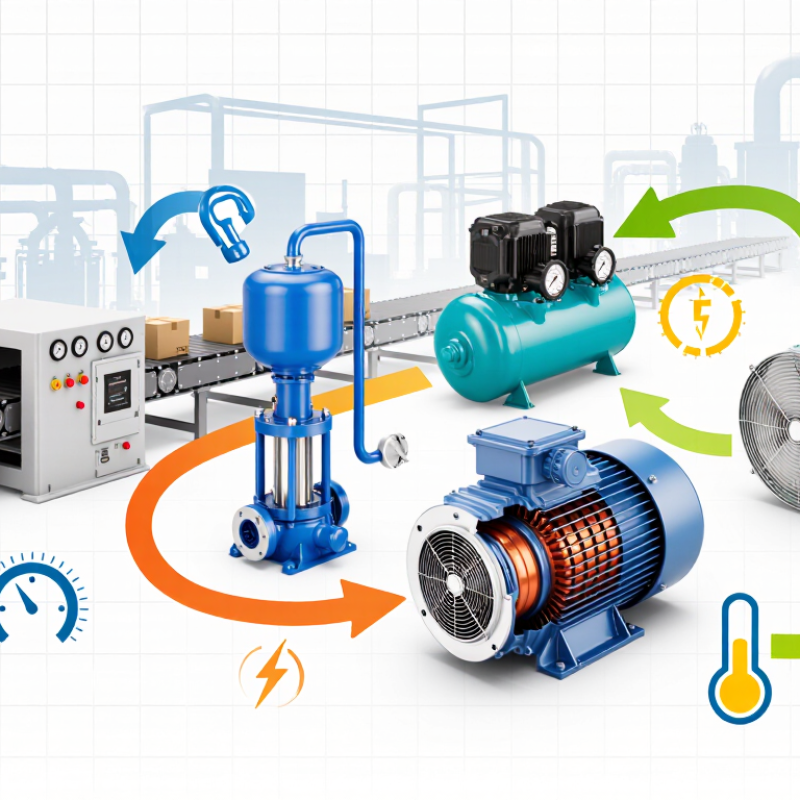
How to Choose the Right AC Motors for Your Needs?
An AC motor converts electrical energy into mechanical rotation. Its stator creates a rotating magnetic field. In an induction motor, this field induces current in the rotor. The rotor then follows the field, but runs slightly slower. This speed difference is called slip. Squirrel-cage motors are simple, durable, and common in pumps, fans, and conveyors. Wound-rotor motors offer better starting control for heavy loads.
Synchronous motors operate differently. Their rotor turns at the same speed as the rotating magnetic field. They may use permanent magnets or electrical excitation. These motors suit applications needing accurate speed. Single-phase motors need a starting method, often a capacitor or shaded-pole design. Three-phase motors usually provide smoother torque and easier industrial operation. The choice depends on the power supply available.
Look beyond horsepower. Check voltage, frequency, rated speed, starting torque, duty cycle, and load inertia. A conveyor carrying full bins needs stronger starting torque than a lightly loaded fan. The installation environment also matters. Dust, moisture, heat, and limited airflow can shorten motor life. Select an enclosure and cooling method for those conditions. Efficiency matters during long operating hours. Control requirements matter too, especially with variable-speed drives. One detail is easy to overlook: a motor can meet its rated power yet still fail during startup. Real loads are rarely perfect. Review the load profile, measure actual operating conditions, and question assumptions before choosing.
| AC Motor Type | Basic Operating Principle | Rotor Construction | Typical Speed Behavior | Starting Torque | Typical Efficiency | Common Applications | Key Selection Considerations |
|---|---|---|---|---|---|---|---|
| Squirrel-Cage Induction Motor | A rotating magnetic field in the stator induces current in the rotor. The interaction between the two magnetic fields produces torque. | Conductive bars short-circuited by end rings; no brushes or slip rings. | Runs slightly below synchronous speed because slip is required to produce torque. Speed changes with load and supply frequency. | Moderate; standard designs are suitable for many general-purpose loads. | Generally about 80–96%, depending on rated power, speed, and design. | Fans, pumps, compressors, conveyors, machine tools, and industrial equipment. | Choose based on load torque, duty cycle, enclosure, environmental conditions, starting current, and required speed control. |
| Wound-Rotor Induction Motor | Works through induction like a squirrel-cage motor, but external resistance can be added to the rotor circuit during starting. | Wound rotor connected to slip rings and brushes. | Operates below synchronous speed; speed can be adjusted over a limited range by changing rotor resistance, although this wastes energy. | High and controllable during starting. | Usually lower than equivalent squirrel-cage motors when external resistance is used continuously. | Heavy conveyors, hoists, cranes, elevators, crushers, and applications requiring high starting torque. | Consider brush and slip-ring maintenance, starting frequency, acceleration time, and whether a variable-frequency drive is a better alternative. |
| Synchronous Motor | The rotor magnetic field locks to the stator’s rotating magnetic field, so the motor runs at synchronous speed after synchronization. | Permanent-magnet, wound-field, or reluctance rotor designs. | Constant speed under normal operation: ns = 120f/p, where f is frequency and p is the number of poles. | Often low without auxiliary starting equipment; many designs use electronic starting or a damper winding. | Typically high, especially near rated load; power factor can be leading, unity, or lagging depending on excitation. | Constant-speed drives, compressors, pumps, large fans, precision machinery, and power-factor correction systems. | Select when constant speed, high efficiency, or power-factor control is important. Check starting method and control-system requirements. |
| Permanent-Magnet Synchronous Motor | The stator creates a rotating magnetic field that interacts with permanent magnets on the rotor. | Permanent magnets mounted on or inside the rotor. | Runs synchronously and normally requires an inverter or variable-frequency drive for starting and speed control. | High controllability; starting torque depends on the drive and motor design. | Often about 90–97% in suitable operating ranges, with no rotor copper loss. | Energy-efficient pumps, fans, compressors, robotics, servomechanisms, and electric traction systems. | Evaluate drive compatibility, demagnetization risk, temperature limits, control complexity, and life-cycle energy savings. |
| Single-Phase Capacitor-Start Motor | An auxiliary winding and capacitor create phase displacement to produce a starting rotating field; the auxiliary circuit is usually disconnected after acceleration. | Squirrel-cage rotor with main and auxiliary stator windings. | Runs below synchronous speed and is intended for single-phase supplies. | High starting torque compared with shaded-pole and split-phase motors. | Commonly lower than comparable three-phase industrial motors. | Small compressors, pumps, workshop machinery, blowers, and household equipment. | Check voltage, capacitor type, starting frequency, overload protection, and available single-phase power. |
| Shaded-Pole Motor | A shaded copper ring delays the magnetic flux in part of each pole, creating weak starting torque and a rotating magnetic effect. | Simple squirrel-cage rotor. | Low-speed operation; speed varies with load and supply frequency. | Low starting torque. | Usually low because of substantial rotor and stator losses. | Small fans, air circulators, timers, displays, and low-power appliances. | Use only for low-power loads that start easily. It is not suitable for high torque, high efficiency, or precise speed control. |
| Universal Motor | A series-connected field and armature produce torque on either AC or DC supply, with current reversal maintaining torque direction. | Wound armature and field with a commutator and brushes. | Very high speed with significant speed variation as load changes. | Very high starting torque. | Moderate to low; brush friction, commutation, and electrical losses are significant. | Portable power tools, vacuum cleaners, mixers, and high-speed domestic appliances. | Consider noise, brush wear, electromagnetic interference, cooling, speed regulation, and maintenance requirements. |
The stator creates a rotating magnetic field. In an induction motor, this field induces current in the rotor. The rotor follows slightly behind. This speed difference is called slip.
It is simple, durable, and widely used. Common applications include pumps, fans, and conveyors. It suits many standard industrial loads.
Consider one when the load needs better starting control. Heavy conveyors may require stronger control during startup. The extra design complexity needs proper maintenance.
A synchronous motor turns at the rotating field’s speed. It does not normally depend on slip. Choose it when accurate speed matters.
Single-phase motors need a starting method, such as a capacitor. Three-phase motors usually provide smoother torque. They also support easier industrial operation.
Check voltage, frequency, rated speed, starting torque, duty cycle, and load inertia. Confirm the available power supply. Horsepower alone is not enough.
Dust, moisture, heat, chemicals, and limited airflow can shorten motor life. A clean room may suit an open design. Wet areas need stronger enclosure protection.
Include energy use, downtime, spare parts, labor, and disposal costs. Use actual operating hours and electricity rates. A cheaper purchase may cost more later.
Confirm voltage, phase, frequency, frame size, shaft dimensions, enclosure rating, and duty cycle. Check compatibility with the driven load and speed controller. Small mismatches can cause vibration.
Record temperature, current, vibration, starts per hour, and cleaning practices. These details reveal problems early. The first estimate may be wrong.
Choosing the right AC Motors begins with understanding how different motor types operate and how their designs affect performance. Start by identifying your application’s load characteristics, required speed range, starting torque, running torque, and power demand. Then compare available voltage and phase configurations, efficiency ratings, and control methods to ensure the motor can operate reliably with your electrical system and production requirements. Proper sizing helps prevent overheating, energy waste, weak performance, and unnecessary equipment failures.
The operating environment is equally important when selecting AC Motors. Consider temperature, humidity, dust, chemicals, vibration, installation space, and the required level of protection. You should also confirm compatibility with drives, controllers, mounting arrangements, and existing machinery. Finally, evaluate maintenance intervals, service accessibility, expected lifespan, energy consumption, replacement parts, and installation expenses. Looking at total ownership costs instead of only the purchase price will help you choose a dependable motor that delivers stable performance and long-term value.

 Brea Tech Micro Motor