Choosing the right High Speed Motors supplier in China requires more than comparing prices and catalog images. Motor performance depends on speed range, torque stability, cooling design, bearing quality, and application conditions. A supplier experienced in CNC equipment, robotics, medical devices, or aerospace systems may understand these demands better than a general manufacturer. The real test is not a polished website. It is consistent engineering evidence.
A reliable supplier should provide clear specifications, including rated speed, peak speed, power output, insulation class, efficiency, vibration limits, and service life. Ask for test reports, sample results, production photographs, and traceable quality records. Factory audits can reveal details that brochures often hide, such as winding cleanliness, balancing equipment, assembly procedures, and final inspection standards. Small details matter.
Request a sample motor before approving large quantities. Measure noise, temperature rise, vibration, starting behavior, and performance under real load. An experienced technical team should explain design limits without making unrealistic promises. Communication speed also matters when drawings change or failures appear. However, no supplier is perfect. Some companies may show strong prototypes but struggle with volume consistency. Others offer stable production but limited customization. This is where careful comparison becomes necessary.
The best choice depends on your operating environment, delivery expectations, budget, and long-term support needs. Certifications can support confidence, but they should match actual factory practices. Independent testing may be worthwhile for critical applications. Choose evidence over attractive claims. Reliability grows through verification, not assumptions.
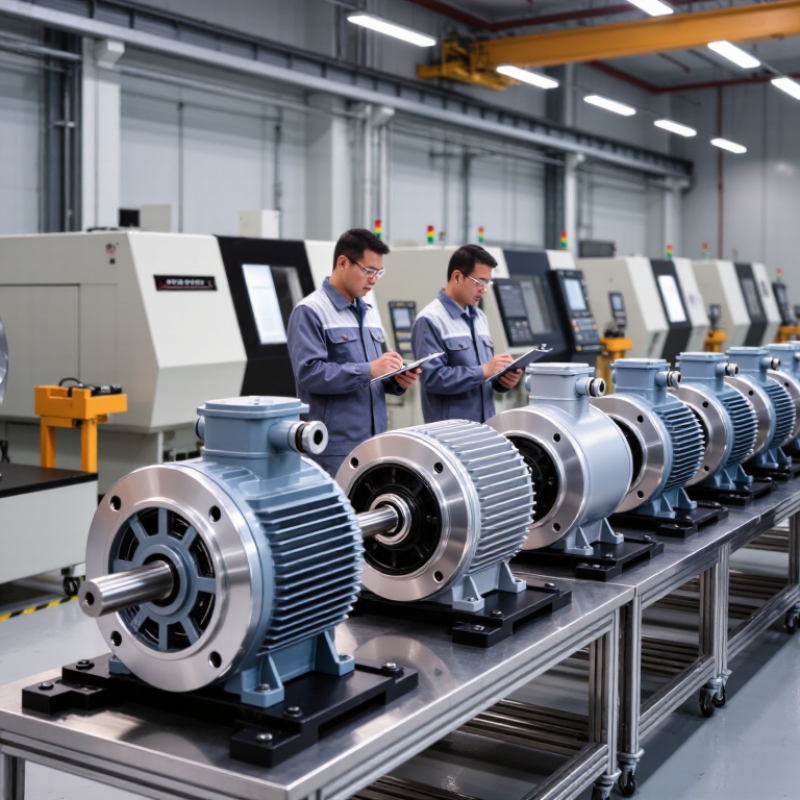
High-speed motors convert electrical energy into rapid rotary motion, often exceeding 10,000 revolutions per minute. The exact definition varies by industry and motor design. Their rotors require precise balancing, strong materials, and carefully controlled bearings. At 30,000 rpm, a tiny imbalance can create noticeable vibration. That detail matters.
These motors power machine-tool spindles, air compressors, vacuum pumps, robotics, and compact cooling systems. A cutting spindle may need steady speed for smooth metal finishing. An air compressor may use high rotational speed to deliver strong output from a smaller housing. Electric vehicles and laboratory equipment also use them where low weight and fast response are important. Good cooling is essential. Heat can damage insulation, bearings, and magnets within minutes.
When choosing a supplier in China, buyers should request measured speed, torque, noise, vibration, and temperature data. Factory testing records are more useful than broad catalog claims. Ask about rotor balancing, bearing life, drive compatibility, and overload protection. Certifications and traceable inspection procedures can support reliability, but they do not replace application testing. I have seen specifications look impressive while omitting continuous-load limits. That deserves caution. No motor fits every machine, so engineers should compare real duty cycles, installation conditions, maintenance access, and total operating cost.
China’s high-speed motor market is led by suppliers with stable engineering systems, not simply low prices. The strongest manufacturers usually control design, machining, winding, balancing, and final testing. Their factories can show rotor balancing reports, insulation records, and thermal test data. Ask about rated speed, peak speed, vibration limits, bearing life, and operating temperature. These details reveal more than a polished catalog.
Look closely at production experience. A reliable supplier should provide samples, traceable components, and clear tolerance standards. It should also explain how it handles rotor stress at high speeds. In practical factory evaluations, suppliers with automated winding equipment and dynamic balancing machines often deliver more consistent results. Certification helps, but it cannot replace independent testing. Ask for customer references in similar industries, such as compressors, machine tools, or medical equipment. Be cautious with impressive claims. Some suppliers publish maximum speed figures without stating load conditions or test duration. That can create costly surprises.
No supplier is flawless. Even experienced manufacturers may struggle with urgent customization or small trial orders. I would compare communication quality, failure analysis, and after-sales response before signing a contract. A capable technical team should answer specific questions without avoiding details. The leading suppliers are those that combine repeatable manufacturing, transparent data, and practical support. Low price alone is a weak signal.
A supplier-selection matrix based on measurable technical, quality, compliance, manufacturing, and service factors
| Evaluation Dimension | Suggested Weight | Objective Data to Compare | Evidence to Request from Suppliers | Relevant Standards or Verification Methods | Why It Matters |
|---|---|---|---|---|---|
| Maximum Operating Speed | 15% | Rated speed, maximum continuous speed, overspeed test speed, and operating time at the target speed. | Signed datasheet, speed-torque curve, overspeed-test report, and application references. | IEC 60034 series; review the complete motor-drive operating envelope. | High-speed applications require stable operation at the required rotational speed, not only a high no-load speed. |
| Power and Torque Capability | 13% | Continuous power, peak power, continuous torque, peak torque, base speed, and field-weakening range. | Performance maps, dynamometer test data, overload duration, and matched inverter specifications. | IEC 60034-1 rating principles; verify values at the actual duty cycle. | Power and torque determine whether the motor can meet acceleration, load, and process requirements. |
| Rotor Mechanical Integrity | 14% | Rotor material, critical-speed analysis, balancing grade, containment design, and overspeed margin. | Rotor-dynamics report, balancing certificate, finite-element analysis, and overspeed test results. | ISO 21940 balancing principles; engineering review of critical speeds and fatigue safety. | Rotor failure at high speed can cause serious equipment damage and safety risks. |
| Bearing and Lubrication System | 10% | Bearing type, rated speed, lubrication method, expected service interval, bearing temperature, and axial-load capacity. | Bearing data sheets, lubrication diagram, temperature limits, and life calculation. | Manufacturer bearing calculations; evaluate compatibility with the planned duty cycle. | Bearings are among the main limits on high-speed motor life, noise, vibration, and reliability. |
| Cooling and Thermal Performance | 10% | Cooling method, heat-exchanger capacity, allowable ambient temperature, winding temperature rise, and derating curve. | Thermal test report, temperature-rise data, cooling-flow requirements, and thermal protection settings. | IEC 60034-6 cooling classifications and IEC 60034-1 temperature-rise requirements. | Effective cooling helps maintain insulation life, bearing performance, efficiency, and continuous output. |
| Efficiency and Energy Consumption | 9% | Efficiency at rated load, partial-load efficiency, power factor, no-load losses, and system efficiency with the inverter. | Test certificates, efficiency map, power-factor data, and motor-drive matching results. | IEC 60034-2-1 test methods; confirm whether efficiency is measured for the motor alone or the complete system. | Comparing the complete motor-and-drive system avoids misleading energy-cost calculations. |
| Vibration and Noise Control | 8% | Vibration velocity, vibration displacement, acoustic sound-pressure level, balancing quality, and test speed. | Factory acceptance test report, vibration spectrum, balancing record, and defined measurement conditions. | ISO 20816 for machine vibration evaluation; measurement conditions must be clearly stated. | Low vibration and noise are essential for precision equipment, machine tools, compressors, and laboratory systems. |
| Insulation and Electrical Reliability | 7% | Insulation class, winding insulation system, voltage rating, inverter-duty capability, partial-discharge control, and surge resistance. | Insulation-system documentation, hipot test, surge test, winding-resistance record, and inverter compatibility statement. | IEC 60034-18 insulation-system guidance and IEC 60034-15 impulse-voltage considerations. | Fast switching from variable-frequency drives can increase electrical stress on motor windings. |
| Protection and Enclosure | 5% | Ingress-protection rating, enclosure type, shaft-seal arrangement, thermal sensors, overspeed protection, and emergency shutdown interface. | Protection test documentation, wiring diagrams, sensor list, and installation requirements. | IEC 60034-5 enclosure protection; confirm the rating for the actual installation environment. | Protection requirements vary between clean rooms, workshops, outdoor sites, and industrial process areas. |
| Quality Management and Traceability | 5% | Quality-system certification, incoming inspection, process controls, serial-number traceability, calibration control, and nonconformance handling. | Current quality certificate, sample inspection plan, calibration records, and corrective-action procedure. | ISO 9001 quality-management framework; independently verify certificate validity. | Documented quality controls reduce variation between prototype, pilot, and production units. |
| Customization and Engineering Capability | 4% | Ability to customize shaft geometry, mounting, cooling, sensors, connectors, control parameters, and mechanical interfaces. | Engineering organization chart, design-change process, sample drawings, and prototype validation plan. | Review drawings, specifications, interface-control documents, and design-validation records. | High-speed motors often need coordinated mechanical, thermal, electrical, and control-system design. |
China Top High Speed Motors Suppliers How to Choose?
When comparing Chinese high-speed motor suppliers, begin with your application, not the lowest quotation. Check rated speed, torque, power density, cooling method, noise, vibration, and expected service life. Request performance curves at different loads. Numbers reveal trade-offs. A supplier with strong engineering experience should explain test conditions clearly, not only provide attractive figures.
Review the supplier’s quality process, production equipment, inspection records, and ability to control rotor balance. Ask for sample data, material details, bearing specifications, and documented endurance tests. Recognized certifications can support reliability, but they should not replace factory audits or technical discussions. Compare prototype quality, communication speed, customization ability, lead time, and after-sales support. Total cost matters more than the initial unit price.
Tips: Ask for two or three test samples. Use the same evaluation conditions. Confirm tolerances in writing. Speak with the engineer who will support your project. A low quote can hide tooling, testing, or packaging costs. Even experienced buyers can overlook thermal performance during short trials. I would also question unusually perfect data. Real motors show variation. A careful supplier explains it and offers a practical correction plan.
When selecting a high-speed motor supplier in China, buyers should evaluate operating data, not marketing labels. The critical figures include rated speed, peak speed, continuous torque, peak torque, and duty cycle. A motor rated at 30,000 rpm may deliver limited torque above its base speed. Ask for the complete torque-speed curve. Also request rotor inertia, allowable overspeed, and run-up time. Small errors matter.
The IEA’s Energy Efficiency 2023 report states that electric motor systems consume more than 40% of global electricity. A U.S. Department of Energy assessment estimated that motors used about 70% of manufacturing electricity. That estimate is old, but still useful. Request efficiency maps across speed and load, plus iron, copper, mechanical, and inverter losses. A single efficiency number can hide poor part-load performance. Check cooling method, coolant temperature, insulation class, and inverter switching frequency. Confirm whether quoted power assumes water cooling at a specified temperature. It often does.
For mechanical reliability, require bearing type, lubrication limits, critical-speed analysis, and vibration results. ISO 20816 provides a recognized vibration-evaluation framework. IEC 60034-1 defines general rating and performance requirements. Ask for test conditions and acceptance limits, not only certificates. Verify acoustic noise, shaft runout, ingress protection, and thermal protection. I would also request endurance-test hours and failure data, although suppliers may not disclose them. That gap needs reflection. Measure the real load. A perfect datasheet is not a perfect motor.
When comparing China’s top high-speed motor suppliers, do not trust polished catalogs alone. Ask for inspection records, winding data, balance reports, and test results from recent batches. A reliable supplier should explain rated speed, vibration limits, insulation class, and cooling performance clearly. Request a sample motor and review its serial traceability. In my experience, small gaps in test records often reveal larger process weaknesses. One missing document is not proof of poor quality, but it deserves questions.
Verify service before signing. Ask who handles technical support, how faults are diagnosed, and which spare parts remain available. Test response time with a detailed engineering question. Clear answers from a named technical contact matter more than friendly promises. Check whether the supplier supports installation training, remote troubleshooting, and documented maintenance schedules. Visit the factory if possible, and compare the production line with the audit report. Photos can look convincing. They can also hide inconvenient details.
Tips: Use a checklist covering quality control, lead times, warranty terms, packing, and export documents. Contact two or three existing customers, with permission, and ask about failures after six months. Require acceptance testing before shipment, including speed, noise, temperature rise, and runout. Keep payment milestones tied to verified results. I would also repeat the audit later. Suppliers change, and one successful order proves less than we want to believe.
Reliable suppliers control design, machining, winding, balancing, and final testing. They provide traceable components and clear tolerance standards. Look for rotor balancing reports, insulation records, and thermal test data. Low price alone proves little.
Ask whether the factory uses automated winding equipment and dynamic balancing machines. These tools can improve consistency between production batches. Request sample reports and photographs of inspection equipment. Machines do not guarantee quality.
Request rated speed, peak speed, allowable overspeed, and run-up time. A motor rated at 30,000 rpm may produce limited torque at higher speeds. Ask for the complete torque-speed curve. Numbers need conditions.
Request efficiency maps across different speeds and loads. Check iron, copper, mechanical, and inverter losses separately. One efficiency figure may hide weak part-load performance. Small losses accumulate.
Confirm the cooling method, coolant temperature, insulation class, and switching frequency. Check whether quoted power assumes water cooling at a specific temperature. That assumption may not appear clearly in a catalog. Read the fine print.
Ask for bearing type, lubrication limits, critical-speed analysis, and vibration results. Also verify shaft runout, acoustic noise, ingress protection, and thermal protection. Request endurance-test hours and available failure data. Missing data deserves reflection.
Ask for test conditions, acceptance limits, and measurement methods. Certification can help, but independent testing remains valuable. Compare vibration results under realistic load conditions. A perfect datasheet is not a perfect motor.
Evaluate communication, failure analysis, customization ability, and after-sales response. Ask for references from similar applications, such as compressors or machine tools. Small trial orders may expose weak support. I might judge too quickly. Consistent evidence matters more.
High Speed Motors are specialized machines designed to operate at significantly higher rotational speeds than conventional motors, making them valuable in applications such as industrial automation, compressors, pumps, machine tools, electric vehicles, and aerospace equipment. Choosing the right supplier in China requires more than comparing prices. Buyers should examine the supplier’s production capabilities, engineering experience, customization options, and track record in the target industry.
A thorough comparison should focus on key specifications, including rated speed, power range, torque, efficiency, cooling method, bearing design, vibration control, noise level, insulation system, and compatibility with the intended drive system. It is also important to verify product quality through certifications, factory audits, testing reports, sample evaluations, and quality-control procedures. Reliable suppliers should provide responsive technical support, clear documentation, stable lead times, warranty coverage, spare parts, and after-sales service. By evaluating both technical performance and long-term service reliability, buyers can select a Chinese supplier that offers safe, efficient, and dependable High Speed Motors for their specific operating needs.

Brea Tech Micro Motor