Choosing the right stepper motor can be a challenge for any project. The NEMA 23 (Ø57mm) stepper motor stands out due to its precise control and versatile applications. Renowned expert Dr. Jane Smith, a leading figure in motion control technology, once stated, "Selecting the right motor is crucial for optimal performance." This insight underscores the importance of understanding your specific needs.
When considering the NEMA 23 (Ø57mm), various factors come into play. Torque requirements, voltage, and driver compatibility must align with your project's goals. A balance between these elements can lead to successful outcomes. Often overlooked, the operating environment can impact motor performance. Factors like temperature and humidity may alter performance expectations.
Making the best choice requires detailed research. Each project has unique demands that may challenge conventional wisdom. Sometimes, the most popular options may not be ideal. It's essential to reflect on your specific requirements before finalizing your decision. By focusing on these details, you increase your chances of achieving reliable and efficient motion control in your applications.
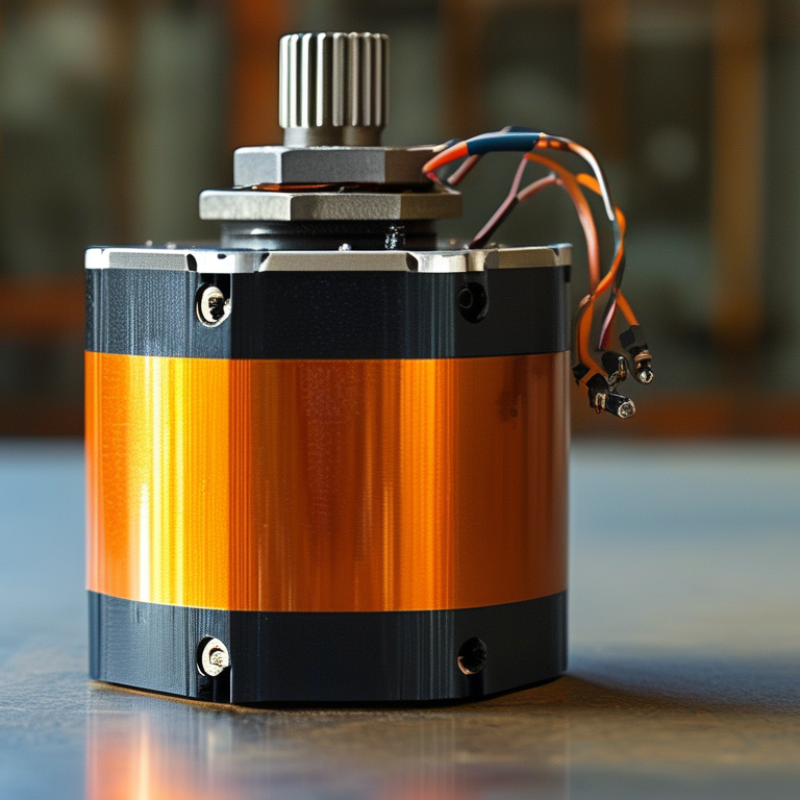
Understanding NEMA 23 Stepper Motor Specifications and Types
When selecting a NEMA 23 stepper motor, understanding specifications is vital. These motors come with various torque ratings, typically ranging from 0.5 to 3 Nm. The torque you need depends on your application. A higher torque motor can manage heavier loads but may require more power. Feel free to experiment with different torque levels to find what works.
Another critical specification is the step angle, commonly 1.8 degrees for NEMA 23 motors. This dictates the resolution of movement. Smaller step angles provide finer control but may lead to a more complex setup. Additionally, consider the holding torque and heat generation. A motor that runs hot may reduce its lifespan and performance.
Lastly, the winding configuration affects performance. Bipolar motors generally offer more torque and efficiency. Yet, they can need more complex drivers. Take your time to weigh the pros and cons. Each detail influences your project significantly. Engaging with these specs helps ensure you pick the right motor for your specific needs. Experimentation can also reveal insights not found in datasheets. Always reflect on your choices and how they impact overall performance.
Key Factors to Consider When Selecting a NEMA 23 Stepper Motor
When selecting a NEMA 23 stepper motor for your project, it is crucial to assess several factors. Torque requirements often top the list. A motor with inadequate torque will struggle, compromising performance. According to industry reports, a NEMA 23 motor typically provides between 0.5 to 2.0 Nm of holding torque. This variance can significantly impact applications, from CNC machines to 3D printers.
Pay close attention to the voltage and current ratings. Motors operate optimally within their specified limits. Exceeding these ratings can lead to overheating and failure. The available power supply must match the motor requirements to ensure long-lasting performance. Consider the application’s duty cycle as well. Continuous high loads can wear down a motor quickly.
Tip: Check the motor’s step angle. A common choice is the 1.8 degrees step angle, resulting in 200 steps per revolution. This can enhance precision but might not always be the best choice for speed-driven projects.
Beyond specifications, consider thermal management. Motors generate heat during operation, impacting efficiency. Conducting regular temperature checks can help you prevent potential failures. Recognizing these nuances makes a significant difference in project outcomes.
Evaluating Torque and Speed Requirements for Your Project
When selecting a NEMA 23 stepper motor, evaluating torque and speed requirements is crucial. Torque is critical for ensuring that your application can operate smoothly under load. According to industry standards, a NEMA 23 motor typically provides between 0.5 to 1.9 Nm of holding torque. Understanding the specific torque requirements of your project helps prevent underperformance or motor stalling.
Next, consider the speed specifications necessary for your application. Most NEMA 23 motors can achieve speeds from 200 to 1000 RPM. The desired acceleration and deceleration profiles must also align with your project needs. Too high of a speed selection may lead to missed steps or inadequate torque, which can hinder precision. Reports suggest that applications requiring rapid movement should balance speed with sufficient torque ratings.
It’s essential to evaluate the operational environment as well. High temperatures or extreme conditions can affect motor performance. Consistently monitor temperature readings during use to avoid overheating. In some cases, users find that their initial torque and speed calculations are unrealistic. This iterative process can lead to more informed decisions, ultimately enhancing the reliability of your project.
How to Choose the Best NEMA 23 Stepper Motor for Your Project? - Evaluating Torque and Speed Requirements for Your Project
| Motor Model |
Holding Torque (Nm) |
Rated Current (A) |
Step Angle (°) |
Max Speed (RPM) |
Voltage (V) |
| NEMA 23-1 |
1.8 |
2.0 |
1.8 |
300 |
24 |
| NEMA 23-2 |
2.0 |
2.5 |
1.8 |
400 |
24 |
| NEMA 23-3 |
2.5 |
2.8 |
1.8 |
350 |
30 |
| NEMA 23-4 |
1.5 |
1.9 |
1.8 |
280 |
24 |
| NEMA 23-5 |
2.2 |
2.4 |
1.8 |
360 |
36 |
Comparing Driver Compatibility for NEMA 23 Stepper Motors
When selecting a NEMA 23 stepper motor, driver compatibility is crucial. The right driver affects
performance and efficiency. Various drivers offer differing levels of precision
and torque. According to industry reports, stepper motors paired with
high-quality drivers produce 20% more torque, enhancing movement control.
Choosing the right driver can significantly reduce missed steps in applications like
CNC milling or 3D printing.
It's essential to consider the current rating of the motor and driver. NEMA 23 motors typically have
a current range of 2.0 to 3.0 A per phase. Drivers should match this to ensure optimal operation.
If a driver cannot handle the motor's requirements, it may lead to overheating or inadequate performance.
Balancing the voltage supplied to the motor also promotes better torque output.
Tips: Always review the specifications of both the driver and motor
before making a decision. Not all drivers are created equal, and some may provide more features than others.
It can be beneficial to test different combinations to find the best match for your needs.
Understanding the setup's limitations is key; sometimes, compromising on features might be necessary for
budget constraints.
Assessing Cost and Availability of NEMA 23 Stepper Motors
When assessing the cost and availability of NEMA 23 stepper motors, it's crucial to consider various factors. Prices can vary significantly, often influenced by performance specifications. A motor with a higher torque rating will typically cost more. It's wise to compare prices from various suppliers. Pay attention to shipping costs, as they can affect your overall budget.
Availability can be a concern too. Some models may be back-ordered or in limited supply. This situation can delay your project. Checking stock levels before making your purchase is advisable. Local suppliers might have quicker access, but online options can offer a broader selection.
It's also essential to think about long-term support. Will the motor you choose have replacement parts available when needed? Research online forums or communities where users share their experiences. This can provide insights into reliability and usability. Investing time in understanding these aspects can lead to better decisions for your projects.
Conclusion
When selecting a NEMA 23 (Ø57mm) stepper motor for your project, it is essential to understand the specifications and types available. The motor’s torque and speed requirements must align with the demands of your application, making evaluation crucial. Key factors to consider include the motor's performance characteristics, driver compatibility, and the overall cost and availability in the market.
By carefully assessing these aspects, you can ensure the NEMA 23 stepper motor you choose will meet your project's needs effectively. This comprehensive approach not only enhances performance but also contributes to the success of your endeavor, as selecting the right motor can impact efficiency and reliability significantly.

 Brea Tech Micro Motor