China Top 10 Low Voltage Motor Manufacturers?

Time:2026-10-15 Author:Henry
0%

China has become a major production base for Low Voltage Motors, serving factories, water systems, compressors, fans, pumps, and automated equipment worldwide. Yet choosing a reliable manufacturer requires more than comparing catalog prices. A polished website can hide inconsistent bearings, unclear testing procedures, or weak after-sales support.

This guide examines ten leading Chinese manufacturers through practical criteria. These include production experience, motor efficiency, IEC compliance, voltage flexibility, quality control, customization, delivery capability, and export service. A useful comparison should also consider real operating conditions. A 30 kW motor running in a dusty workshop faces different demands from one installed in a clean commercial building.

Motor-systems researcher Dr. Anibal T. de Almeida has emphasized that motor efficiency must be evaluated across the complete drive system, rather than by nameplate data alone. That principle matters here. An efficient motor may still waste energy when poorly sized, badly aligned, or paired with an unsuitable variable frequency drive.

The ranking is not absolute. Market positions change, and supplier performance can vary between factories, product families, and individual orders. That is an important limitation. Buyers should request test reports, dimensional drawings, warranty terms, reference projects, and sample inspections before making a final decision.

Some manufacturers excel in standard three-phase motors. Others are stronger in hazardous-area designs, compact frames, or engineered solutions. The best choice depends on the application, not reputation alone. Small details matter. A missing terminal mark can delay installation. A weak seal can shorten service life. This overview aims to make those differences easier to see.
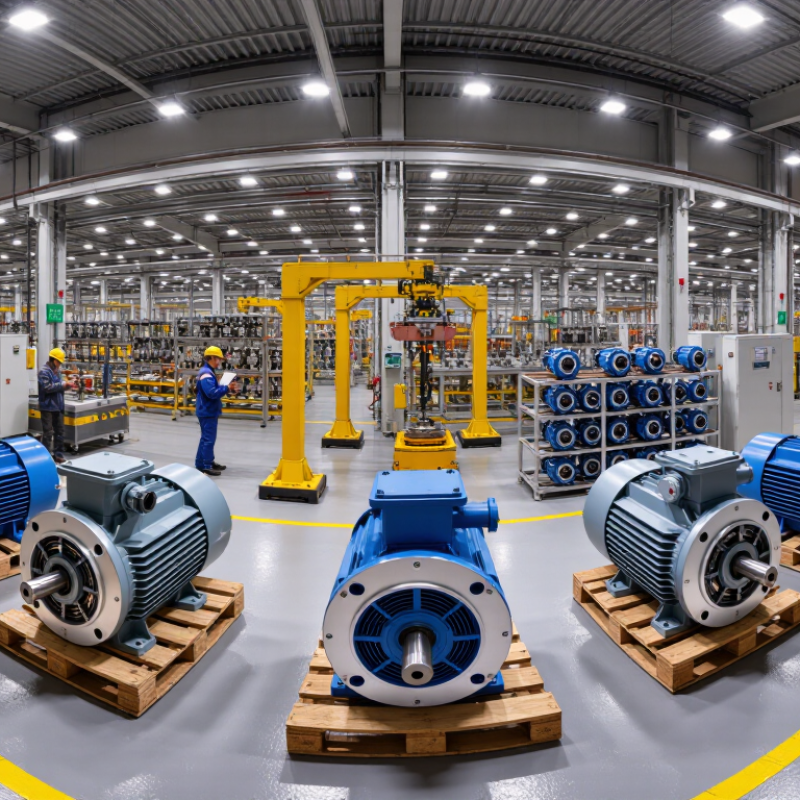
China Top 10 Low Voltage Motor Manufacturers?

What Are Low Voltage Motors and Why Do They Matter?

Low voltage motors convert electrical energy into rotary motion for everyday industrial equipment. They commonly power pumps, fans, conveyors, compressors, and machine tools. Low voltage usually means operation below 1,000 volts, although regional standards may define the category differently. That distinction matters during equipment selection and compliance checks. A motor rated for 400 volts may fail prematurely if connected incorrectly or exposed to unstable power. Load, speed, starting torque, enclosure design, and cooling method also affect performance. Maintenance technicians often inspect bearings, insulation, vibration, and temperature rather than trusting the nameplate alone.

These motors matter because they influence production reliability and energy use. A 30-kilowatt motor can run for thousands of hours each year. Small efficiency losses then become significant operating costs. Properly sized motors reduce overheating, nuisance trips, and unnecessary replacement work. Protection against dust and moisture is equally important in workshops, water plants, and outdoor installations. Starting current deserves attention too. A weak electrical system may experience voltage drops when several motors start together. When comparing manufacturers, buyers should review efficiency test reports, insulation classes, service factors, spare-part access, and technical support. A polished catalog is not enough. Field conditions can expose assumptions quickly. I would also question unusually high efficiency claims without independent test evidence, because installation quality often determines the result.

China Top 10 Low Voltage Motor Manufacturers? - What Are Low Voltage Motors and Why Do They Matter?

Manufacturer-neutral benchmark: minimum motor efficiency for a 15 kW, 4-pole low-voltage motor under IEC 60034-30-1 efficiency classes. Higher efficiency reduces operating losses and energy consumption.

IE1, IE2, IE3 and IE4 are international motor efficiency classes. Actual performance depends on rated power, speed, load, voltage, frequency and test conditions; these figures are not company rankings or brand data.

How China’s Top 10 Low Voltage Motor Manufacturers Are Selected

Selecting China’s top 10 low voltage motor manufacturers requires more than comparing website claims. The process should begin with verified production experience, technical records, and consistent quality controls. I would examine factory capacity, winding equipment, rotor balancing, insulation systems, and final-load testing. Factory evidence matters.

Each candidate should provide current certifications, test reports, efficiency data, and clear voltage and frequency specifications. Independent laboratory results deserve more weight than promotional performance figures. I would also review failure rates, warranty cases, spare-part availability, and delivery records from recent projects. Customer references can reveal details that brochures often omit, such as vibration after six months or slow technical replies. A site visit adds value when inspectors check serial numbers, test benches, and component traceability.

The ranking should also consider customization experience, export documentation, energy efficiency, and long-term service capability. However, public information is sometimes incomplete, and factory visits may show only selected production lines. No list is perfect. Therefore, each manufacturer should receive a weighted score instead of a vague reputation label.

Technical performance might represent 35%, quality assurance 25%, reliability history 20%, and service response 20%.

These percentages are practical, not universal. A buyer should adjust them for mining, water treatment, manufacturing, or other operating conditions. Humidity, dust, starting frequency, and installation altitude can change the final choice.

Profiles of China’s Top 10 Low Voltage Motor Manufacturers

China’s top 10 low voltage motor manufacturers serve factories, pumps, compressors, fans, and material-handling equipment. Their profiles show different strengths rather than one universal leader. Several focus on standard three-phase induction motors, while others develop high-efficiency, brake, explosion-protected, or customized units. Their product ranges usually cover 0.12 kW to several hundred kilowatts.

The International Energy Agency reports that motor-driven systems consume more than 40% of global electricity. In industry, they can represent about 70% of electricity demand. This makes efficiency testing essential.

The leading Chinese manufacturers commonly follow IEC 60034 requirements and China’s GB standards. Their stronger capabilities include automated winding lines, dynamic balancing, thermal testing, and export documentation. However, rankings are not absolute. Public sales data often mix motors with complete drive systems. That is a weakness.

Tips: Compare efficiency class, rated duty, insulation grade, bearing quality, noise level, and service support. Ask for third-party test reports, not only catalogue figures. Check performance at partial load, where many motors operate. A reliable supplier should explain temperature rise and protection ratings clearly. Factory visits can reveal practical details, such as winding cleanliness and final inspection discipline. Cost still matters, but a cheaper motor may consume more electricity for years. Procurement teams should calculate total ownership cost before selecting a manufacturer.

How Chinese Low Voltage Motor Manufacturers Compare

China’s low voltage motor manufacturers compete through scale, flexible production, and dense component supply chains. The International Energy Agency estimates that motor-driven systems use about 46% of global electricity. Efficiency is therefore more than a purchasing detail. It affects operating cost, carbon exposure, and maintenance planning.

Many Chinese factories now offer motors aligned with IEC 60034-30-1 efficiency classes. Their strongest advantage is customization. Buyers can request 380-400 V ratings, special shaft dimensions, brake motors, or severe-duty insulation. Lead times can also be shorter when copper, bearings, and cast housings are sourced locally. In practical audits, however, the nameplate is only the beginning. Testing should include no-load current, temperature rise, vibration, and efficiency at partial load.

Cost remains attractive, but the comparison is not always simple. The IEA’s Energy Efficiency 2023 analysis emphasizes that efficient motor systems deliver savings across years of operation, not only at purchase. Some suppliers provide excellent test records and traceability. Others still offer uneven documentation, limited field support, or unclear warranty procedures. That gap matters in a dusty pump room, where a small bearing issue can stop production. Lower prices can hide integration costs. Buyers should compare total ownership cost, certification quality, spare-part access, and response time. Chinese manufacturing is highly capable, but assuming every factory offers identical engineering depth would be a mistake.

How to Choose the Right Chinese Low Voltage Motor Supplier

Choosing among China’s top 10 low voltage motor manufacturers requires more than comparing prices. The International Energy Agency estimates that electric motor systems consume nearly 46% of global electricity. Small efficiency differences can therefore increase factory costs significantly. Ask suppliers for tested efficiency values, not catalogue claims. IEC 60034-30-1 defines motor efficiency classes, including IE3 and IE4. Confirm the exact class, rated output, voltage, frequency, and operating duty.

Experience matters at the production line. Request winding temperature records, vibration limits, bearing details, and routine test reports. A reliable Chinese supplier should provide traceability from copper wire to final assembly. Check whether its laboratory uses calibrated instruments and follows ISO 9001 procedures. The U.S. Department of Energy reports that motor systems can represent about 70% of industrial electricity use. Correct sizing is often more valuable than choosing the cheapest unit.

Inspect samples before signing a large order. Run a motor under realistic load, including starts, stops, and variable-speed operation. Review IP protection, insulation class, noise, and spare-parts availability. Communication quality is a practical test. Slow answers may become costly delays. I have seen technically strong quotations fail because drawings were unclear. That is easy to overlook. Also, do not treat every certificate as proof of performance; verify the issuing body and test conditions. Supplier rankings help create a shortlist, but independent testing should make the final decision.

FAQS

What are low voltage motors?

Low voltage motors convert electrical energy into rotary motion. They often drive pumps, fans, conveyors, compressors, and machine tools. Low voltage usually means below 1,000 volts, but regional standards can differ.

Why do low voltage motors matter in industry?

They affect production reliability and energy costs. A 30-kilowatt motor may operate thousands of hours yearly. Small efficiency losses can become large expenses.

What should buyers check before selecting a motor?

Check voltage, frequency, load, speed, starting torque, cooling, and enclosure design. A 400-volt motor can fail early after incorrect connection. Unstable power also creates trouble.

How can technicians judge motor condition?

They should inspect bearings, insulation, vibration, and temperature. The nameplate is not enough. A warm bearing or unusual hum deserves attention.

How are manufacturers compared fairly?

Review production experience, testing systems, certifications, efficiency data, and delivery records. Inspect winding equipment, rotor balancing, and final-load testing when possible. Factory evidence matters.

What testing information should suppliers provide?

Request no-load current, temperature-rise, vibration, and efficiency results. Test performance at partial load too. Independent reports deserve more trust than polished catalog claims.

Why is customization useful for low voltage motors?

Buyers may need special shaft dimensions, brake motors, or stronger insulation. They may also require 380-400 volt ratings. Dust, humidity, and frequent starts change the correct design.

Is the cheapest motor always the best choice?

No. Compare purchase price, energy use, spare parts, warranty handling, and technical response. A low price may hide integration costs. I would question unusually high efficiency claims without independent evidence.

What makes a manufacturer’s ranking reliable?

Use weighted scoring instead of vague reputation. Technical performance, quality control, reliability history, and service response can receive separate scores. No ranking is perfect.

What installation details can affect motor performance?

Several motors starting together may cause voltage drops. Dust can restrict cooling. Moisture can damage insulation. Installation quality often decides whether laboratory performance appears in real operation.

Conclusion

Low Voltage Motors are essential components in industrial machinery, commercial equipment, building systems, pumps, fans, compressors, and automated production lines. This article explains what these motors are, how they operate within lower-voltage electrical systems, and why their efficiency, reliability, safety, and maintenance requirements matter. It also presents a practical framework for selecting China’s top 10 low voltage motor manufacturers based on product quality, engineering capabilities, production capacity, certifications, customization options, delivery performance, technical support, and customer service.

The profiles provide a clear overview of each manufacturer’s strengths without focusing only on size or market visibility. The article also compares Chinese suppliers in terms of efficiency ratings, motor designs, application coverage, quality control, pricing, and international support. Finally, it offers guidance for choosing the right supplier by considering operating conditions, required power, voltage, installation environment, compliance needs, total ownership cost, warranty terms, and after-sales service. This approach helps buyers make informed sourcing decisions and select a dependable partner for long-term motor applications.

Henry

Henry

Henry is a dedicated marketing professional with a profound expertise in the company's offerings. With years of experience in the industry, he possesses an impressive understanding of the market dynamics and consumer behaviors that drive success. Henry is committed to sharing his insights through......