What Are the Best Miniature Motors in 2026? The answer depends on the job, not a single “best” specification. A motor driving a watch hand faces different demands from one positioning a camera lens, feeding a medical pump, or moving a compact robot joint. Size matters. So do torque, speed, heat, noise, expected service life, and the available power supply. A neat catalog rating can still disappoint when the motor runs continuously inside a warm, enclosed device.
Industry reports help explain why careful selection matters. The International Federation of Robotics’ World Robotics 2024 report counted about 4.28 million industrial robots operating worldwide in 2023, a 10% increase over the prior year. The International Energy Agency’s Global EV Outlook 2024 projected roughly 17 million electric-car sales in 2024. These figures do not measure miniature-motor sales directly. They do show expanding use of automated and electrified systems, where small motors may serve actuators, pumps, fans, and precision mechanisms. That distinction matters.
This guide compares brushed DC, brushless DC, coreless, stepper, and geared options through practical criteria: control accuracy, efficiency, torque density, noise, and integration needs. It also considers real-world details, such as a gearbox’s added length or heat trapped behind a plastic housing. No motor wins every trade-off. And published lifetime figures deserve a closer look; testing conditions may not match yours. The most reliable choice is the one whose performance data fits the device’s actual duty cycle, with room for testing before production.
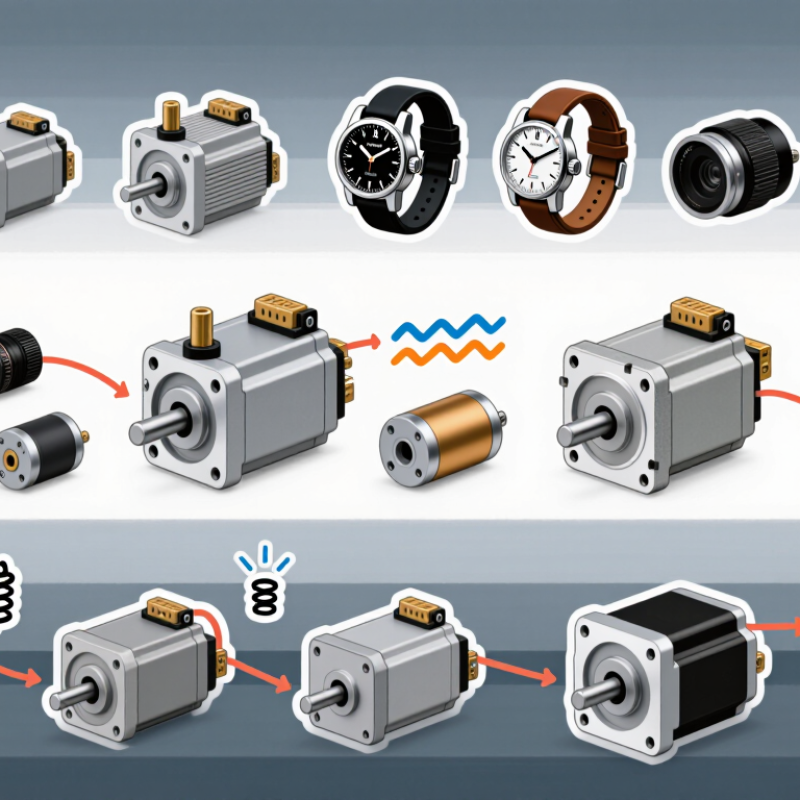
What Are the Best Miniature Motors in 2026?
How Miniature Motors Are Defined and Classified
“Miniature motor” has no single, universal size cutoff. IEC 60034-1 covers rotating electrical machines, but does not define a standard miniature category. In practice, engineers describe a motor by its dimensions, voltage, torque, speed, and intended load. A motor that fits inside a small camera may still be too large for a medical pump. That boundary is a little frustrating.
Classification starts with how the motor produces motion. Common types include brushed DC, brushless DC, stepper, induction, and synchronous motors. Other labels describe construction or added parts: coreless refers to rotor design, while a gearmotor combines a motor and gearbox. These distinctions matter. A stepper can position a tiny lens in measured increments; a geared DC motor can turn a small wheel with greater torque. The International Energy Agency estimates that motor-driven systems account for about 53% of global electricity use, underscoring why efficiency matters even at small scales.
Tips: Compare rated torque and operating speed under your actual load, not just the motor’s unloaded speed. Check stall current, heat, noise, and available space. Small does not mean simple. A neat specification sheet may still leave unanswered questions about vibration or lifespan. Test a sample in the real assembly.
| Motor Type | How It Works | Key Characteristics | Advantages | Trade-Offs | Best-Fit Applications |
|---|---|---|---|---|---|
| Brushed DC | Current flows through brushes and a commutator to produce rotation. | Speed generally varies with voltage and load; reversing supply polarity reverses rotation. | Simple drive electronics, straightforward speed control, and widely available compact formats. | Brushes wear over time and can create electrical noise; service life depends on operating conditions. | Small pumps, toys, handheld devices, and mechanisms where low-cost, simple rotation is sufficient. |
| Coreless DC | A brushed DC design with a lightweight, ironless rotor winding. | Low rotor inertia supports rapid acceleration and deceleration; available performance varies by design. | Responsive speed changes and smooth operation in applications with frequent starts and stops. | Still uses brushes in common configurations; thermal limits and cost can constrain some designs. | Portable instruments, precision mechanisms, and compact actuators requiring quick response. |
| Brushless DC (BLDC) | Electronic commutation switches current in the stator windings; the rotor carries permanent magnets. | Requires an electronic controller; may use sensor-based or sensorless commutation. | No mechanical brushes to wear, with good efficiency and speed capability when properly matched to a controller. | Control electronics add cost and design complexity; performance depends on motor-controller matching. | Cooling fans, compact tools, drones, and equipment needing efficient continuous rotation. |
| Stepper | Electrical pulses energize stator phases in sequence, moving the rotor in discrete steps. | Can move to commanded step positions without a position sensor in open-loop systems; microstepping requires a suitable driver. | Useful for repeatable positioning and low-speed motion; holding torque is available when energized. | May lose synchronism under excessive load; can draw current and generate heat while holding position. | Small positioning stages, valve control, instrument mechanisms, and compact printers. |
| Geared Miniature Motor | A motor is paired with a gearbox that reduces output speed and increases available output torque. | A configuration rather than a separate motor principle; gear ratio, gearbox type, and motor type determine performance. | Provides lower-speed, higher-torque output in a compact package. | Gears add friction, backlash, noise, and wear; output speed and efficiency depend on the gearbox. | Robotics, miniature wheels, latches, and mechanisms that need more torque than a bare motor provides. |
| Miniature Servo Assembly | A motor, reduction gears, position sensing, and control electronics work together as an actuator. | Usually designed for controlled angular positioning; available travel, feedback, and control interface vary by model. | Integrates motion components and position control in one assembly. | Not simply a motor; size, travel, speed, and load capacity must be checked for the complete assembly. | Small robotic joints, model mechanisms, camera positioning, and compact control surfaces. |
Definition note: “Miniature motor” has no single universal size cutoff. The term generally describes a compact motor intended for space-constrained equipment; dimensions, power, and performance vary by motor type and application. “Best” depends on required torque, speed, positioning accuracy, duty cycle, available space, power supply, and control method.
The best miniature motor depends on its workload, not its advertised peak speed. Compare torque at the operating speed, startup current, voltage, and duty cycle. A motor may spin quickly on a bench but stall when it must move a small gear train or lift a real load. Check the full torque-speed curve, not just one headline figure. Heat matters. In a compact housing, limited airflow can shorten service life or force a lower operating rate.
Efficiency is useful, but it should be measured at the load and speed you actually need. The U.S. Department of Energy’s 2023 Motor Systems Market Assessment reports that motor-driven systems account for about 69% of electricity use in U.S. manufacturing. That figure covers industrial systems, not miniature motors specifically; it still highlights why wasted power deserves attention. Also compare noise, vibration, shaft dimensions, and expected operating life. Small is not simple. A tidy datasheet can hide differences in test conditions, so compare like with like.
Tips: Measure current, temperature, and noise under the real load. Leave a safety margin for startup torque. If two candidates look nearly identical, test both in the final assembly; friction and mounting can change the result.
Miniature motor choice depends on motion, not size alone. Brushed DC motors are simple, inexpensive, and easy to control for wheels, pumps, and small mechanisms. Brushless DC motors trade extra electronics for longer service life and quieter operation. They suit compact fans and handheld tools where heat and battery time matter. Small does not mean simple.
Stepper motors move in measured increments, making them useful for miniature stages, valves, and camera mechanisms. They can hold position without a separate brake, but may vibrate or lose steps under excess load. Coreless motors offer low rotor inertia and quick acceleration; that helps in lightweight grippers and precision instruments. Gearmotors add torque in a small package, though gears introduce noise, backlash, and wear. Trade-offs remain.
The IEA’s 2011 assessment estimated that motor-driven systems consume about 45% of global electricity; it is not a miniature-motor market study. The U.S. Department of Energy’s motor-systems sourcebook reports that such systems use about 68% of U.S. industrial electricity. These figures reinforce the value of efficient design, but do not predict a tiny motor’s performance. For a real selection, compare torque at the actual speed, startup current, temperature rise, and available space. A motor that fits on paper may still run hot inside a sealed plastic housing.
For miniature robotics, a geared DC motor often provides a useful balance of speed and torque. It can turn small wheels or move a lightweight arm without demanding complicated control. Check the gearbox ratio, shaft size, and stall current before choosing. A motor that looks compact may still draw more current than a small driver can handle. Fit matters.
For precise positioning in camera mechanisms, lab instruments, or compact actuators, a stepper motor can move in measured increments. It works best when the load stays within its torque limits. A servo-style motor may suit a mechanism that needs feedback and controlled movement. For fast, sustained operation in a handheld tool or cooling fan, a brushless motor can reduce brush wear. Heat matters. Tiny housings shed heat slowly, so test the motor under its real load.
Compare operating voltage, noise, vibration, and expected duty cycle—not just rated speed. A paper specification cannot show how a motor behaves inside your enclosure, beside a warm battery, or under repeated starts. Leave room for wiring and mounting, too. There is no universal winner, and I would treat advertised peak performance cautiously. A brief bench test with the actual load can reveal binding, excess heat, or disappointing runtime before the design is fixed.
Choosing the right miniature motor starts with the motion your design needs, not the smallest part in a catalog. Define the required speed, starting torque, load, and available space. Then check the motor’s voltage and current against your power supply. A tiny motor can stall when a mechanism binds, even if its no-load speed looks impressive. Consider the full operating cycle, too: brief bursts and continuous running create different heat demands. There is no universal best choice. The trade-off is easy to miss.
For steady rotation, a brushed or brushless DC motor may suit a compact fan or wheel; the right option depends on control needs and expected use. A geared motor can provide more output torque at lower speed, but adds size and mechanical complexity. If precise positioning matters, compare a stepper motor’s holding behavior with a servo system’s feedback and control requirements. Check noise, vibration, and gearbox play in the assembled design. These details may seem minor on a drawing. In a small enclosure, they can decide whether the mechanism feels smooth or frustrating.
No. Size depends on the design and intended load. A motor that fits inside a camera may be too large for a small pump.
Common types include brushed DC, brushless DC, stepper, induction, and synchronous motors. Coreless describes rotor construction, while a gearmotor combines a motor and gearbox.
Check torque at your actual operating speed and load. No-load speed alone can be misleading. That matters.
A motor may draw extra current at startup or stall when a mechanism binds. Allow margin in your power supply and test with the real load.
Not necessarily. Compare efficiency at the speed and load you need. Heat, noise, vibration, and operating life also matter.
It can provide more output torque at a lower speed, such as turning a small wheel. The gearbox adds size and mechanical complexity.
A stepper can move in measured increments. A servo system uses feedback, so compare its control needs with your design.
Measure current, temperature, and noise under the real load. Check shaft fit, mounting, wiring clearance, and gearbox play. A datasheet may not tell the whole story.
Yes. Friction, mounting, and limited airflow can affect performance and heat. I might still overlook a vibration issue until the full assembly runs.
Miniature Motors are compact devices designed to convert electrical energy into controlled motion in applications where space, weight, and efficiency matter. They can be classified by their operating principles and construction, with common options including brushed and brushless DC motors, stepper motors, and coreless designs. Comparing them requires more than looking at size: speed, torque, power consumption, precision, noise, heat, service life, and control requirements all affect performance.
The best motor depends on the job it must do. Small pumps and fans may prioritize steady speed and efficiency, while robotics or precision instruments may need accurate positioning and responsive control. To choose the right Miniature Motors for a design, first define its load, available space, power supply, operating conditions, and expected duty cycle. Then compare suitable motor types and verify that their performance, mounting, and control needs fit the complete system.

Brea Tech Micro Motor