Choosing the right motor in 2026 requires more than comparing torque ratings on a product page. High Torque Motors must deliver dependable starting force, stable speed control, and acceptable heat performance under real operating conditions. A conveyor may face sudden load changes, while a robotic arm may demand precise movement within a narrow cycle. These applications need different motor designs.
Professor Thomas A. Lipo, a respected authority in electrical machines and motor drives, has stated, “Motor performance depends on the complete drive system, not the motor alone.” This principle guides our review of the 2026 Top High Torque Motors for Global Buyers. We examine continuous torque, peak torque, efficiency, thermal management, duty cycle, voltage compatibility, control options, and service support. We also consider practical details, such as whether a motor can operate reliably in a dusty workshop or inside a compact automated cabinet.
Numbers can mislead.
A high peak-torque figure may hide poor continuous performance. A lower-rated model may perform better with suitable gearing, cooling, and control software. Our evaluation draws on manufacturer documentation, engineering specifications, application experience, and widely accepted motor-selection practices. It does not treat one brand as universally superior. Regional voltage standards, replacement-part access, installation skills, and total ownership costs can change the final decision.
There is no perfect motor.
This guide aims to help engineers, purchasing teams, and system integrators create a defensible shortlist. Some comparisons remain imperfect because manufacturers report testing conditions differently. That limitation deserves attention, not concealment. Reliable selection begins with measured requirements and ends with performance verified in the intended application.
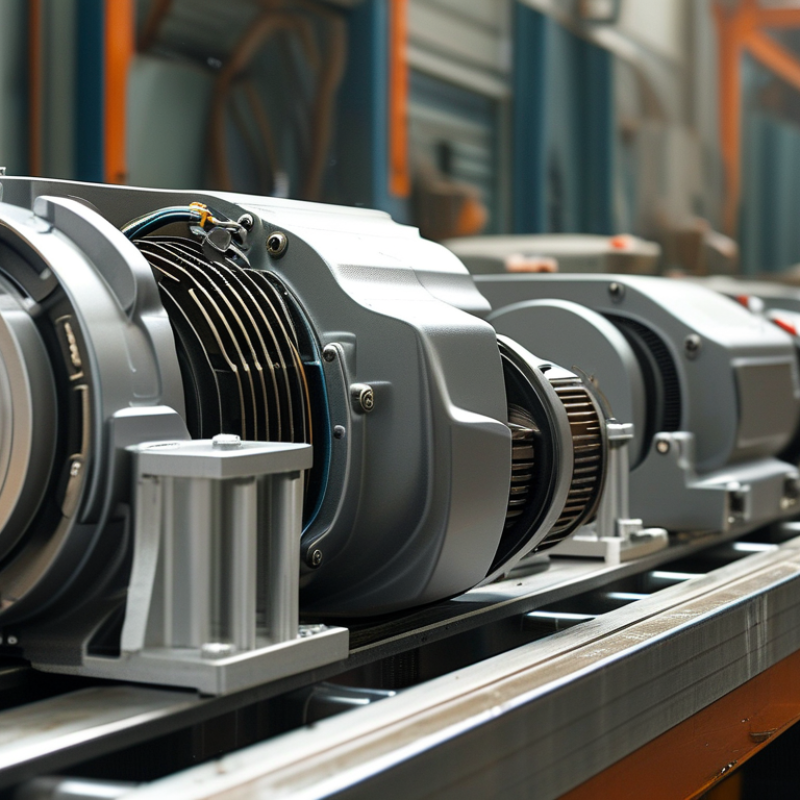
A high-torque motor produces strong turning force, especially at low speed. Torque is measured in newton-metres. It determines whether a motor can start and move a heavy load.
The working principle is practical. Electrical current creates a magnetic field inside the stator. This field pulls the rotor around its shaft. More current usually creates more torque, but it also creates more heat. A gearbox can multiply output torque while reducing speed. That trade-off matters in conveyors, winches, mixers, and robotic joints.
The distinction is easy to blur. A high-power motor is not always a high-torque motor.
The International Energy Agency reported that electric motor systems consume roughly half of global electricity. The U.S. Department of Energy also identifies motor-driven systems as major industrial electricity users, often exceeding half of site consumption. These figures make efficiency a purchasing issue, not a technical luxury.
Buyers should check rated torque, peak torque, duty cycle, thermal limits, and overload capacity. A motor that survives a five-second start may fail during repeated cycles. My own engineering review would also question catalog torque figures, because test conditions differ between suppliers. Ambient temperature, controller settings, and shaft alignment can change real performance. Small details matter. For global projects, confirm voltage, frequency, protection rating, service support, and compliance with IEC 60034 requirements before ordering.
High-torque motors now serve conveyors, robotics, lifting systems, and electric mobility. The International Energy Agency reports that electric motor systems consume about 50% of global electricity. Efficiency is no longer a minor specification. It directly affects operating cost, heat, and maintenance.
Induction motors remain practical for pumps, compressors, and heavy industrial equipment. Their rugged construction supports demanding environments, although they usually need more current for starting torque.
Switched reluctance motors offer simple rotor designs and strong overload tolerance. However, vibration and acoustic noise can complicate machine integration.
Servo and brushless DC motors provide fast response for robotic joints and automated positioning. The International Federation of Robotics recorded 541,302 industrial robot installations worldwide in 2023, showing why controllable torque remains important.
Gear motors deserve attention too. A gearbox can multiply output torque while reducing shaft speed, but it adds weight, backlash, and lubrication needs.
Field commissioning often reveals the gap between catalogue torque and real performance. Duty cycle, ambient temperature, shock loads, and inverter settings matter. No single type wins.
Sources: International Energy Agency, Energy Efficiency 2024; International Federation of Robotics, World Robotics 2024.
2026 Top High Torque Motors for Global Buyers
Performance Factors: Torque, Speed, Power, and Efficiency
For global buyers, high torque is only one part of motor performance. Torque controls starting force and load handling. A motor rated at 500 Nm may still struggle if that torque is available only briefly. During practical selection, I check continuous torque, peak torque, shaft speed, and duty cycle together. Measure at the shaft, not only from the catalog.
Speed changes how useful torque becomes. A slow motor may drive a conveyor steadily, while a faster motor can reduce gearbox size. Power connects both factors: power rises when torque and speed rise together. For example, a 10 kW motor running at 1,500 rpm behaves differently from one delivering the same power at 750 rpm. The lower-speed unit usually offers more shaft torque. This is often missed.
Efficiency should be judged at the real operating point, not only at the advertised peak. Ask for efficiency curves, thermal limits, overload data, and test conditions. A motor working near its efficient range produces less heat and may reduce operating costs. In dusty factories or hot regions, cooling design matters as much as electrical ratings. I have seen selections fail because ambient temperature was treated as a minor detail. Leave practical margin, but avoid excessive oversizing. It raises purchase cost and may reduce efficiency. I still review these choices after installation, because field noise, vibration, and changing loads often reveal assumptions that laboratory tests cannot.
Representative performance ranges for commonly specified high-torque motor technologies. Actual values vary with frame size, voltage, cooling method, duty cycle, controller, and operating temperature.
| Motor Technology | Typical Continuous Torque | Typical Peak Torque | Typical Speed Range | Typical Power Range | Peak-to-Continuous Torque Ratio | Typical Peak Efficiency | Cooling Options | Control Requirements | Typical Duty Profile | Common High-Torque Applications |
|---|---|---|---|---|---|---|---|---|---|---|
| Permanent-Magnet Synchronous Motor | 50–2,500 N·m | 100–5,000 N·m | 500–6,000 rpm | 10–800 kW | 2.0–3.0 × | 92–97% | Natural air, forced air, or liquid cooling | Variable-frequency inverter with rotor-position feedback recommended | Continuous operation with frequent acceleration and deceleration | Electric traction, conveyors, compressors, winches, industrial machinery |
| AC Induction Motor | 20–3,000 N·m | 40–6,000 N·m | 600–3,600 rpm | 5–1,000 kW | 1.8–2.5 × | 88–95% | Totally enclosed fan-cooled, forced air, or liquid cooling | Direct-on-line, soft starter, or variable-frequency drive | Continuous-duty loads with high starting requirements | Pumps, crushers, mixers, fans, hoists, conveyors, compressors |
| Brushless DC Motor | 1–500 N·m | 2–1,000 N·m | 1,000–10,000 rpm | 0.2–150 kW | 2.0–3.5 × | 88–95% | Natural air, forced air, or liquid cooling | Electronic commutation with Hall sensors or sensorless control | Variable-speed operation with repeated starts and stops | Mobile equipment, robotics, pumps, fans, automation systems |
| AC Servo Motor | 0.5–1,500 N·m | 1.5–4,500 N·m | 1,000–6,000 rpm | 0.1–300 kW | 2.5–4.0 × | 90–96% | Natural air, forced air, or liquid cooling | Closed-loop servo drive with encoder or resolver | High-acceleration, high-precision intermittent duty | Machine tools, robotic joints, packaging, printing, indexing systems |
| Switched Reluctance Motor | 10–1,500 N·m | 20–3,000 N·m | 500–8,000 rpm | 2–500 kW | 2.0–3.0 × | 85–94% | Forced air or liquid cooling | Dedicated power converter with rotor-position sensing or estimation | High-starting-torque and wide-speed-range operation | Industrial drives, pumps, compressors, conveyors, electric vehicles |
| Axial-Flux Permanent-Magnet Motor | 20–1,200 N·m | 40–2,400 N·m | 500–5,000 rpm | 5–400 kW | 2.0–3.0 × | 93–97% | Air or liquid cooling, depending on power density | High-performance inverter with position feedback | High torque density with compact axial packaging | Electric mobility, compact traction systems, aerospace auxiliaries |
| Direct-Drive Torque Motor | 100–20,000 N·m | 200–40,000 N·m | 1–1,000 rpm | 5–500 kW | 1.5–2.5 × | 90–96% | Natural air, forced air, or liquid cooling | Precision inverter with high-resolution feedback | Low-speed continuous operation without a gearbox | Rotary tables, turret drives, cable reels, test rigs, large positioning systems |
| Permanent-Magnet Gear Motor | 50–10,000 N·m at output shaft | 100–20,000 N·m at output shaft | 5–500 rpm at output shaft | 1–250 kW | 1.8–3.0 × | 85–94% | Natural air, forced air, or oil cooling | Inverter or motor starter; gearbox sizing is essential | High-load, low-speed continuous or cyclic operation | Conveyors, mixers, hoists, feeders, rotary equipment |
| Low-Voltage High-Torque Motor | 5–1,000 N·m | 10–2,000 N·m | 300–3,600 rpm | 1–150 kW | 2.0–3.0 × | 86–94% | Totally enclosed fan-cooled or liquid cooling | Low-voltage drive, soft starter, or direct-on-line starting | Frequent starting in battery-powered or distributed systems | AGVs, mobile machinery, marine auxiliaries, compact industrial equipment |
| High-Voltage Industrial Motor | 500–100,000 N·m | 750–200,000 N·m | 300–3,600 rpm | 500–20,000 kW | 1.5–2.5 × | 94–98% | Open air, enclosed air-to-air, air-to-water, or liquid cooling | Medium- or high-voltage starter, soft starter, or variable-frequency drive | Long-duration continuous operation with high inertia loads | Mining, cement, steel, marine propulsion, water infrastructure, power generation |
2026 Top High Torque Motors for Global Buyers
Selecting the right high-torque motor starts with the load, not the advertised peak torque. A conveyor lifting a wet load needs different performance from a robotic joint with frequent reversals. Define continuous torque, starting torque, speed range, duty cycle, and stopping frequency before comparing models. Shortlist motors by the actual torque-speed curve.
Global operating conditions matter. Check voltage, frequency, phase configuration, ambient temperature, altitude, and enclosure rating. A motor tested at 400 V and 50 Hz may not behave identically on a 460 V, 60 Hz supply.
The U.S. Department of Energy’s Motor Systems Market Assessment identifies motor-driven equipment as a major share of industrial electricity use. The IEA’s Energy Efficiency 2023 report also highlights large efficiency opportunities in motor systems. Small efficiency losses become expensive in continuous operation.
Thermal design deserves careful attention. Verify insulation class, cooling method, overload capacity, bearing life, and inverter compatibility. IEC 60034-30-1 efficiency classifications help buyers compare performance, but efficiency alone cannot predict field reliability.
I would not trust a catalog torque number without checking its test conditions. That is a common mistake.
Request test curves, noise data, protection ratings, service factors, and documented compliance for the destination market. Leave margin for voltage variation and unexpected load peaks, but avoid excessive oversizing, which can reduce control quality and raise purchase costs.
2026 Top High Torque Motors for Global Buyers
Global buyers are changing their motor checklists. The IEA’s Energy Efficiency 2024 report estimates that electric motor systems consume about half of global electricity. High torque designs can reduce oversizing, but only when load profiles are measured accurately. Ask for torque-speed curves, starting current, duty cycle, thermal limits, and efficiency data. Do not trust “premium torque” as a technical specification. It is not precise enough.
Supplier selection requires more than a low quotation. Request traceable test reports, winding-temperature records, bearing details, and documented quality procedures. ISO 9001 certification supports process control, while IEC 60034-1 and IEC 60034-30-1 help verify motor safety and efficiency. The U.S. Department of Energy reports that motor-driven equipment represents a major share of industrial electricity use. Small efficiency differences can therefore affect operating costs for years.
Indicative 2026 pricing may range from 300 to 5,000 USD for standard industrial units, excluding drives, freight, duties, and installation. Custom cooling, hazardous-area protection, or low-speed torque can raise costs sharply. Confirm voltage, frequency, enclosure rating, shaft dimensions, and local efficiency rules before payment. For international shipments, review CE, UKCA, RoHS, REACH, or equivalent market requirements with a qualified compliance specialist. Some supplier documents look complete but omit regional testing. That weakness is easy to miss. A factory video is useful, yet independent inspection remains more reliable.
Global buying standards, supplier evaluation, cost drivers, and compliance considerations for industrial high-torque motor procurement.
Request documentation aligned with IEC 60034 for rotating electrical machines, IEC 60072 for motor dimensions, IEC 60034-30-1 for efficiency classes, and IEC 60529 for IP enclosure ratings.
Compare qualified manufacturers, regional distributors, and contract production partners by test reports, traceability, delivery capacity, spare-parts support, warranty terms, and customization capability.
Total landed cost depends on power rating, copper and electrical steel content, efficiency class, enclosure protection, brake or encoder options, freight, tariffs, testing, and minimum order quantity.
Confirm the destination-market requirements, including CE or UKCA where applicable, electrical safety files, EMC documentation, hazardous-area certification when required, energy-efficiency declarations, and RoHS or REACH records.
: Peak torque may last only briefly. Check continuous torque, starting torque, speed, and duty cycle together. Measure torque at the shaft. Catalog values can mislead.
Power increases when torque and speed rise together. A 10 kW motor at 750 rpm usually provides more shaft torque than one at 1,500 rpm. Speed changes practical performance.
Define the load, torque range, speed range, stopping frequency, and reversal pattern. A wet conveyor load differs greatly from a robotic joint. The load comes first.
Evaluate efficiency at the real operating point, not only at the advertised peak. Small losses become expensive during continuous operation. Ask for efficiency curves and test conditions.
Check ambient temperature, altitude, dust, cooling method, and enclosure protection. Hot factories need careful thermal planning. I have seen temperature assumptions cause failures.
Confirm voltage, frequency, phase configuration, and inverter compatibility before payment. A motor tested at 400 volts and 50 hertz may behave differently elsewhere. Leave reasonable voltage margin.
Request torque-speed curves, overload data, temperature records, bearing details, noise data, and traceable test reports. Factory videos help, but independent inspection is stronger. Documents can still omit regional testing.
Indicative prices may range from 300 to 5,000 USD, excluding drives, freight, duties, and installation. Custom cooling and low-speed torque can increase costs sharply. Estimates remain uncertain.
Moderate margin helps with voltage variation and load peaks. Excessive oversizing raises purchase costs and may reduce efficiency or control quality. Bigger is not always better.
This guide to High Torque Motors explains how these motors generate strong rotational force and why they are essential for demanding applications such as automation, lifting systems, industrial machinery, electric mobility, and precision equipment. It introduces major motor types, including AC, DC, brushless, servo, and geared designs, while comparing their operating characteristics and suitable use cases. Readers will also learn how torque, speed, power, thermal performance, duty cycle, control accuracy, and energy efficiency affect real-world performance.
For global buyers, selecting the right motor requires balancing application requirements, installation conditions, maintenance needs, total operating cost, and long-term reliability. The article also outlines practical purchasing considerations, including supplier evaluation, product documentation, testing, warranty support, shipping arrangements, and compliance with applicable regional standards. By reviewing these factors together, buyers can make informed decisions, reduce integration risks, and choose a high-torque solution that delivers dependable performance across different markets and operating environments.

Brea Tech Micro Motor